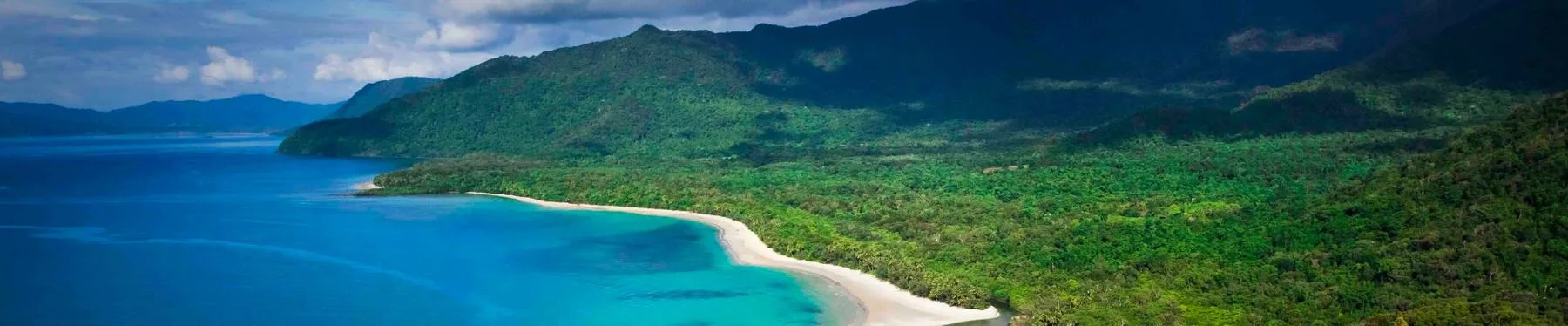
Studies and visions · Cape Kimberley, Douglas Shire
The four initial systems, at Cape Kimberley.
These are the four initial systems for our first landscape and industry, proving in our part of the world, built for all of it. Any property in Land-IP can be laid out across these four. Here is how each is planned on our own station.
One species runs through all four: noni, the pale green in every drawing, earning from year 3 while the longer trees build.
System 1
Cropping· Alley cropping
Tree rows with a working bed between. The rows are the method; what runs on them is a choice.
- Beach calophyllum
- Noni
- Acacia nurse
- Turmeric bed
Rows 4.4 m apart · a plant every metre
Turmeric from year 1
Species options
- Planted as standard
- Turmeric on the bed, noni and beach calophyllum on the rows, acacia as the nurse
- Native alternatives
- Sea almond for leaf, and ten natives for these rows
- Non-native alternatives
- Six bed crops and a cover crop break for the turmeric bed
System 2
Agroforestry
Durian over a productive grid, sheltered by natives.
- Durian
- Cacao
- Native crop trees
- Native rows grown for mulch
12 m top storey over a 2 × 2 m grid
Noni from year 3, cacao from year 4
Species options
- Planted as standard
- Durian over cacao and natives on the 2 × 2 grid, every second row grown to be cut back as mulch, so nothing needs watering
- Native alternatives
- Ten natives that can take the crop places and give the shade
- Non-native alternatives
- Breadfruit in place of durian, and three more in place of cacao
System 3
Native Regeneration
All native, picked by hand, not felled. Leaf, seed and flower off standing trees.
- Harvest trees
- Tall canopy
- Shelter
- Ground layer
~2,500 stems per hectare, planted in lines
Sea almond leaf from month 6
Species options
- Planted as standard
- All native, drawn from the Wet Tropics’ own species, mixed along every line and picked by hand
- Native alternatives
- Ten more natives for the harvest and canopy shares
- Non-native alternatives
- None, by design
System 4
Silvopasture
Native timber belts with cattle on the grass between. Belts thinned stem by stem, not clear-felled.
- Timber, one row per belt, species rotating
- Noni, between each pair
- Red ash hedge
- Native grass
- Cattle
Belts 20 m apart · 2 head per hectare
Cattle from day one, noni from year 3
Species options
- Planted as standard
- Native timber belts with noni between each pair, fenced from the cattle, a native fodder hedge, grass between
- Native alternatives
- Red cedar, and ten natives for the belt rotation
- Non-native alternatives
- None, by design
Adopt, then adapt
Try your own spacing.
Pick a system and move the slider. The drawing redraws to scale and the trees per hectare follow. The mix of plants stays as planned; only the spacing moves.
1.2 m
- Beach calophyllum
- Noni
- Acacia nurse
- Turmeric bed
- trees a hectare
- 2,273
- trees a hectare
- of bed line a hectare
- 2,273 m
- of bed line a hectare
- of the block under bed
- 27%
- of the block under bed
- between tree rows
- 4.4 m
- between tree rows
The mix stays the same: one main tree, one middle tree and two shelter trees in every 4 m of row, so 568 main, 568 middle and 1,136 shelter trees a hectare. As planned: 2,273 trees a hectare at a 1.2 m bed. This is the planned spacing.
On your ground
Indicative, as if the whole area ran one system, each at the spacing set above. Every figure comes from that system’s plan.
22,727 alley trees, with 22.7 km of turmeric bed between
25,000 agroforestry plants, 700 of them durian
25,000 native stems in regen lines
769 timber trees with 769 noni between, and 20 head on the grass
The standard spacing is the one proven on the farm, so any change is worth trying on a small block first.
What pays, and when
The first 25 years across the four systems.
Each bar starts at first harvest.
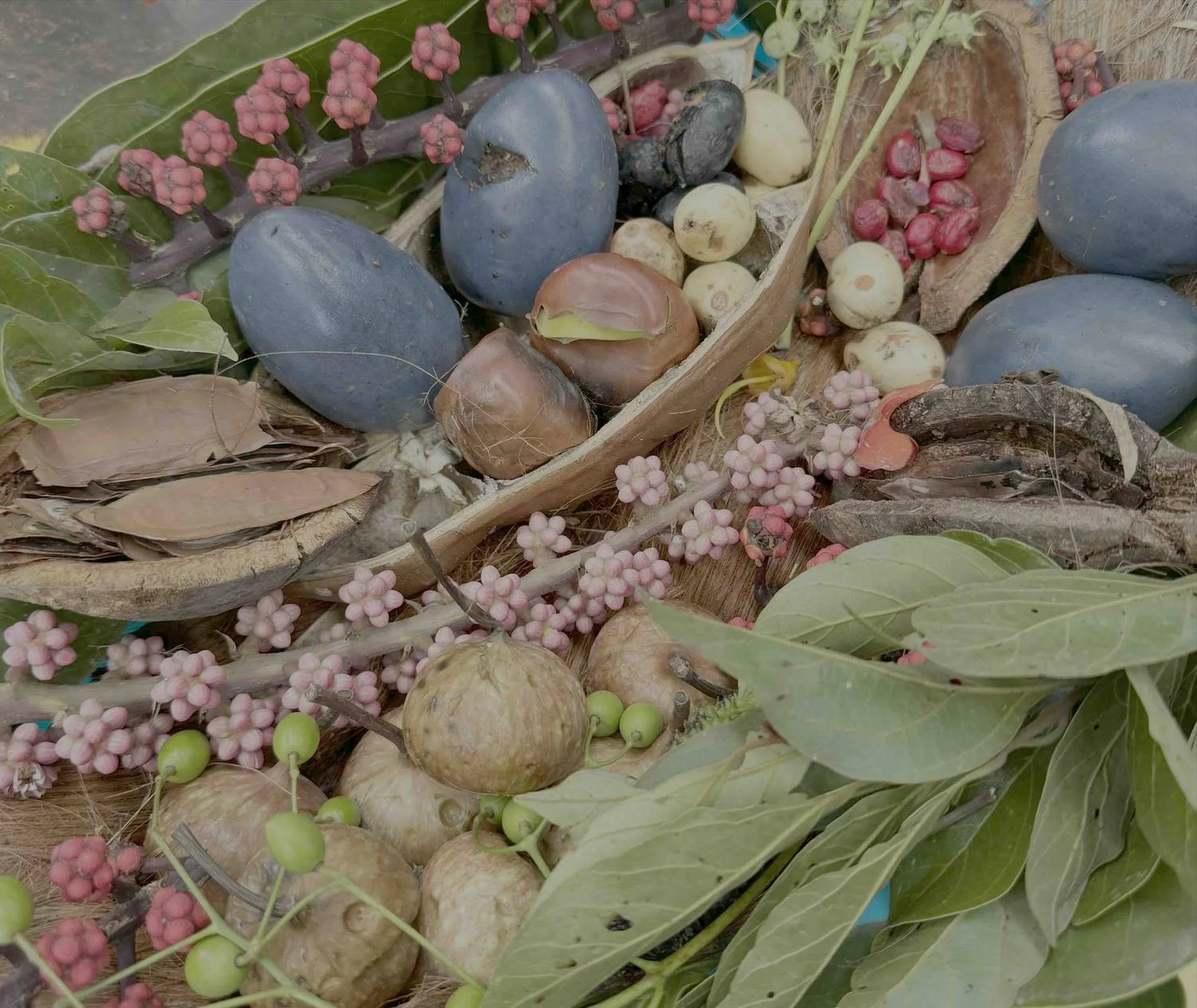
Collected on the station: the lines the systems grow.
Where they go
The marginal land opportunity.
The tests split a farm into good land and marginal. Good land carries the working systems. The marginal edges go native, picked by hand or left to regrow. Nothing is wasted, and nothing is forced.
Tap a test to see where it sits, then press play to watch 25 years. It starts slowly, then picks up speed.
Year 8
The rows grown for mulch are cut, one set a year. Acacia is trimmed onto the beds.
Marginal land carries native planting and native rows worked by hand. Good land carries the beds, the orchards and the cattle. Slopes and heights are drawn steeper than life.
Across the Wet Tropics’ 11 shires the marginal ground adds up to 125,000 ha.

Cane country turning over to new rows, Douglas Shire.
How they grow
Grown the way forests grow.
Four principles run under every system. They are why the plantings get stronger with age, not weaker.
01 · Working with shade
Shade goes in first
Fast natives are planted first and hold the canopy. Young crops grow under their shelter, so the sun is a tool, not a threat.
Shade species first · planted in the wet season
02 · Biomass as fertiliser
The trimmings feed the beds
From year five the acacias are trimmed and the cuttings go straight onto the beds. The rows grow their own mulch and fertiliser.
Chop and drop · acacias trimmed from year 5
03 · Species complexity
Many species stand the storm
Cyclones come. A mix of heights, roots and timbers bends where a single crop breaks, so the planting as a whole holds.
Every species scored five ways for cyclone resilience
04 · Generational planning
Planted for the next steward
Every system is planned in 25 year arcs, with the record keeping the why behind each planting. Whoever holds the ground next inherits a plan, not a puzzle.
Planned in 25 year arcs · seven generations ahead
Track record
Proven on our own ground first.
The charity went first and has been researching and developing since 2019: seven years and seven million dollars into this ground before the first commercial hectare.
The station is Australian Certified Organic. The record carries the proof behind the badge.
- Silvopasture
- Agroforestry
- Cropping
- Native Regeneration
- Hub and buildings
The station from above. The pale paddocks hold the four land systems, and the forest around them stays standing. Hover or tap the photo to see where each system sits (indicative). Imagery © 2026 Google.
The people
Built by many hands
More than 750 interns and volunteers have put their hands in this ground, with six university pathways behind them and partners across Singapore, Vietnam and Hawaii. Planting days are community days, held on Eastern Kuku Yalanji Country in partnership with Jabalbina.
- 750+ interns and volunteers
- Six university pathways
- APAC partners · Singapore, Vietnam, Hawaii
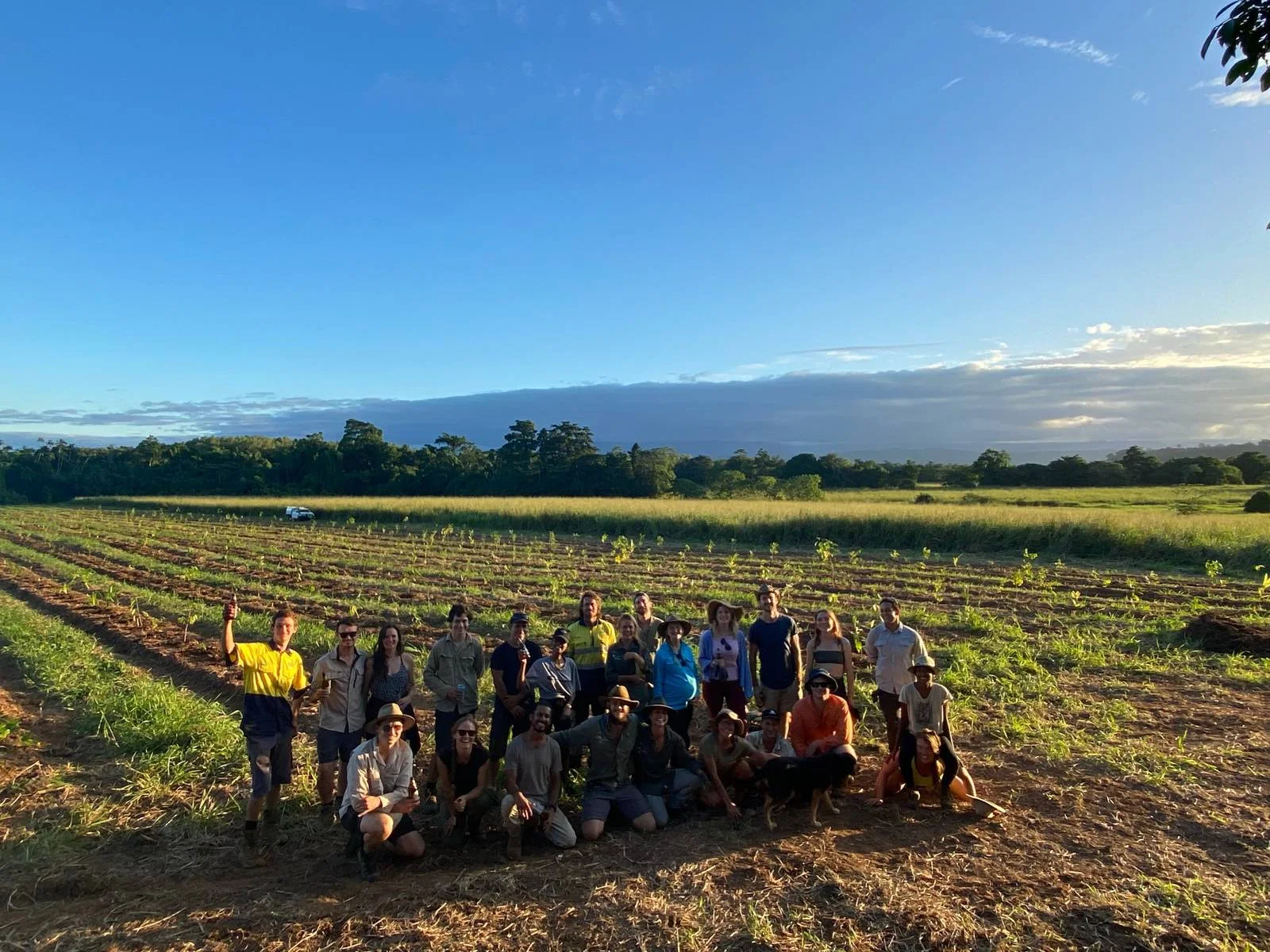
A day’s planting in, Cape Kimberley. The rows behind them are on the record before the light goes.
Case study
The Douglas Blueprint.
When Douglas Shire’s industrial anchor closed, A$45 million a year left the district with it. The blueprint brings it back in four stages, parcel by parcel, and each stage unlocks what the next one needs.
The four marginal-land tests decide what goes where · low · wet · creek side · steep
10 ha
Our ten hectares first, on our own freehold. First harvest 2027.
One farm, seven years, A$7M of charity money. The tool proven in real operations, first harvest 2027.
Land-IP already holds this, with room for far more: a property, a district, a state. Queensland and federal programmes are starting to pull the same way, and the record is ready to meet them.
36 properties and 2,900 ha are already on one map. Full case study: the Douglas Blueprint, October 2026. See it live on the district atlas.
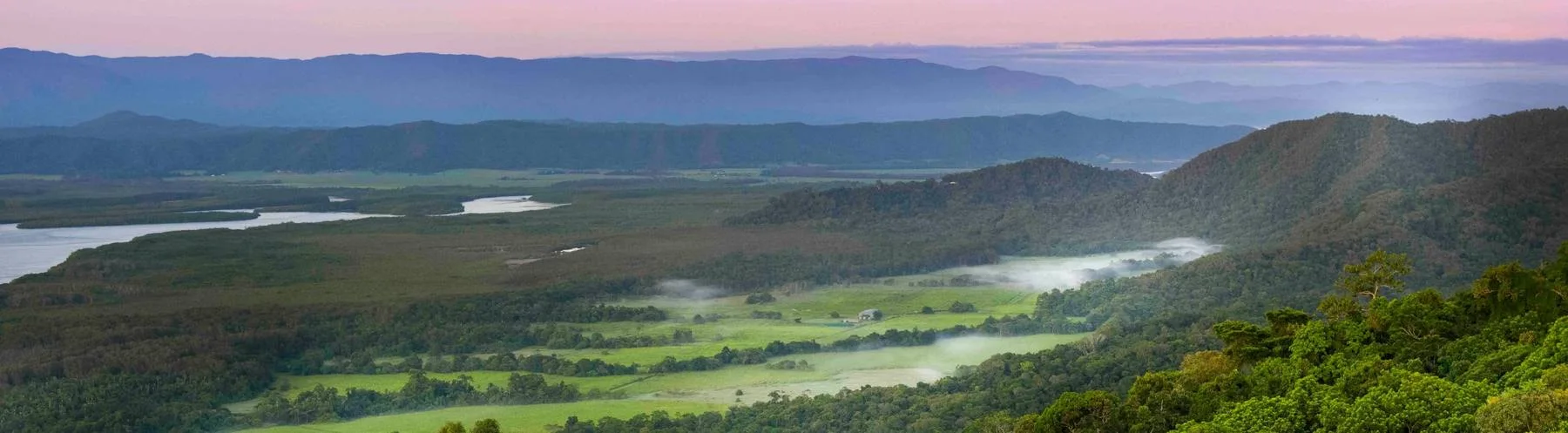
Douglas Shire at first light. Cane flats, river and rainforest: one district, one record.
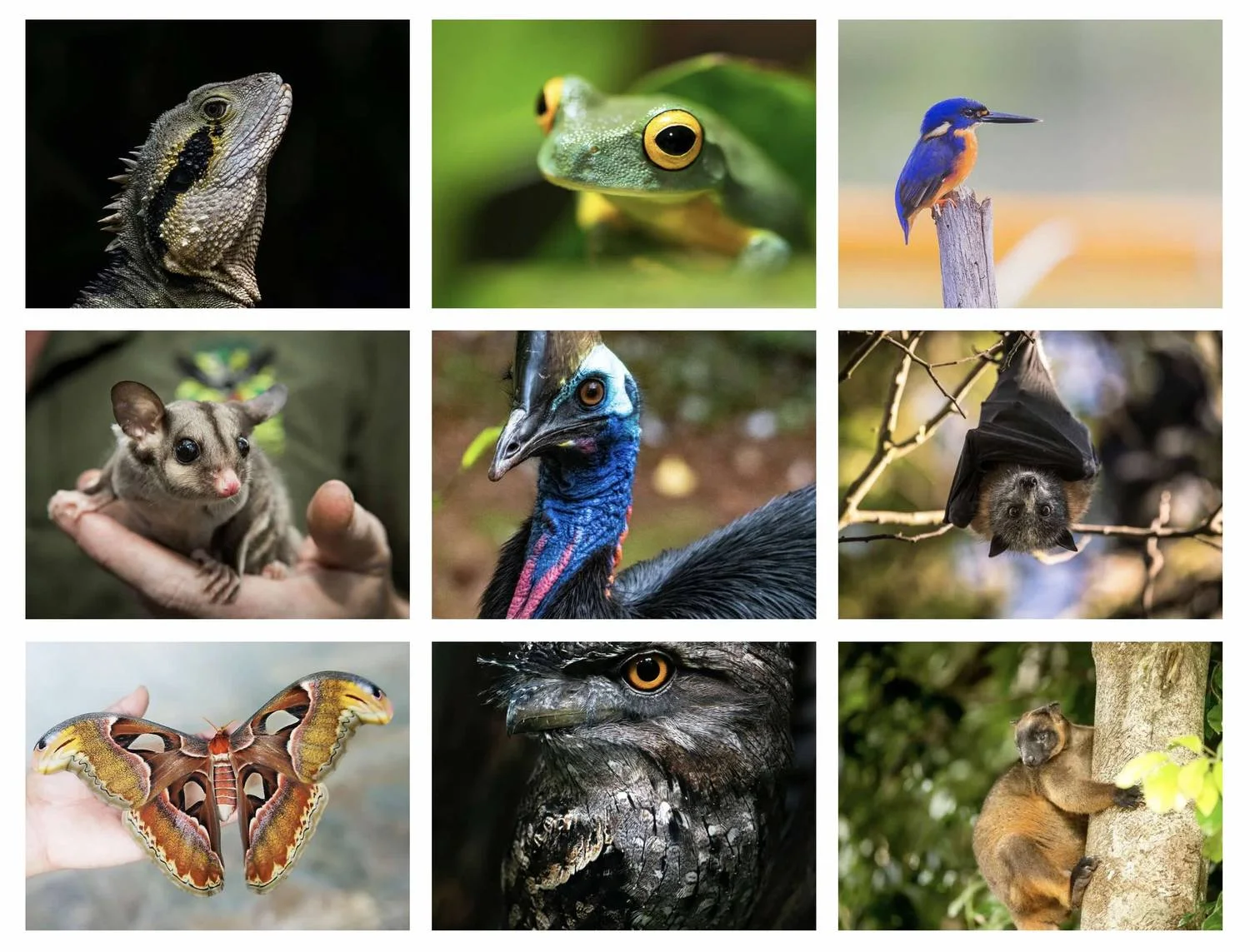
The other locals. Biodiversity sits on the same record as the crops.
The bottom line
Every marginal hectare that enters these systems becomes standing habitat, counted stem by stem, and the native trees are the Wet Tropics’ own.
Cape Kimberley, where the blueprint starts.
Acknowledgement of Country
The ClimateForce acknowledges the Eastern Kuku Yalanji peoples as the Traditional Custodians of the Land and Sea country on which we operate. Sovereignty was never ceded.