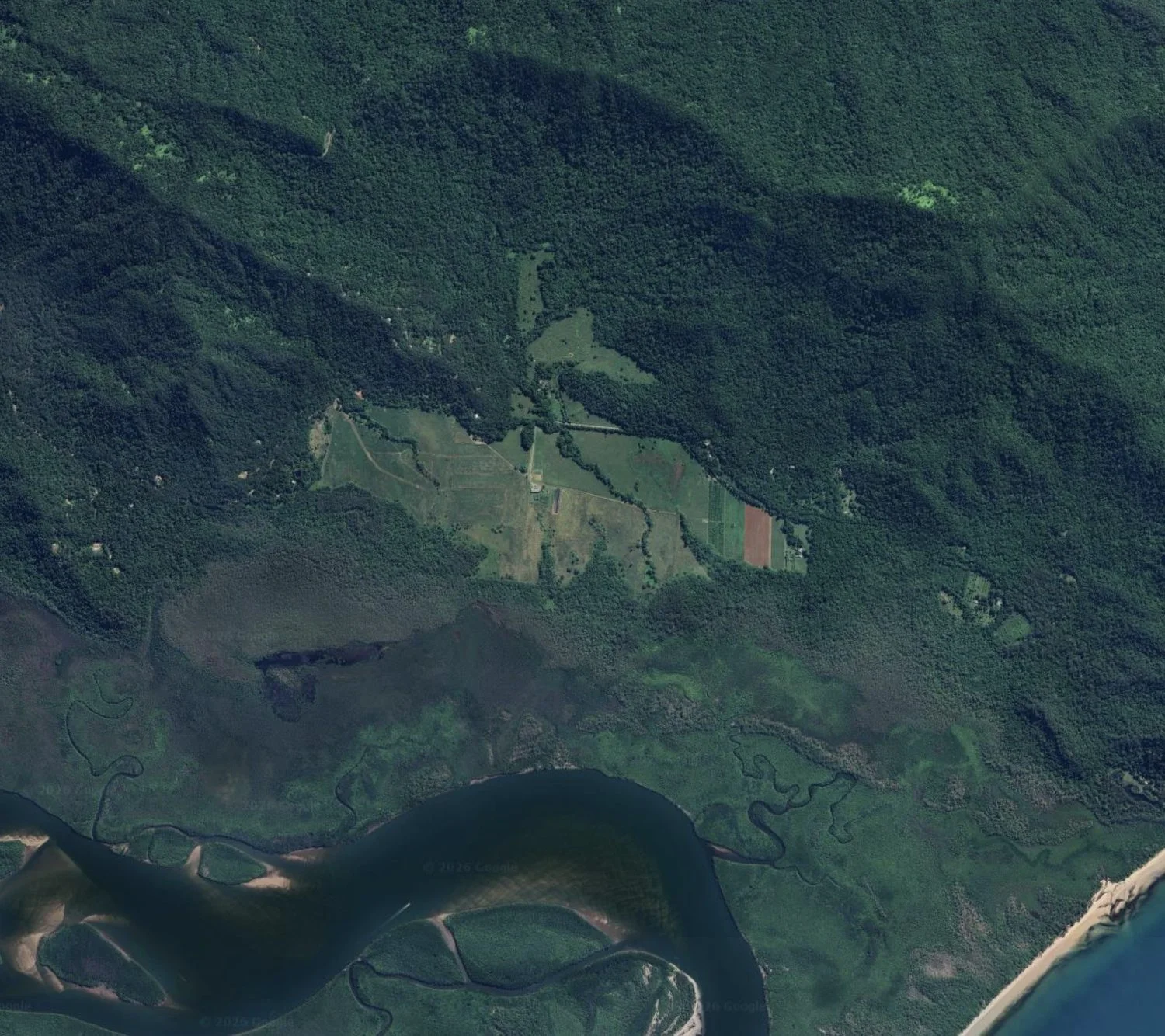
Our station · Cape Kimberley · Douglas Shire
Working this ground since 2019.
213 hectares across three lots between the Daintree River and the reef. Four farming systems are planned here, block by block, and the first of them are in the ground. Land-IP was built here because running the place needed it.
What is in the ground
126.6 ha planned in 32 planting blocks; 131 ha with the sheds, nursery and houses. About 11.7 ha in the ground.
Cropping
A plan
- Hectares planned
- 16.1 ha in 7 blocks
- Hectares planted
- not yet recorded
- What is planted
- not yet recorded
Agroforestry
Measured
- Hectares planned
- 41.7 ha in 13 blocks
- Hectares planted
- 2.2 ha, Plant Out 4
- What is planted
- Cacao. Durian: 163 trees planted December 2025 beside ten older trees. Turmeric under the canopy.
Native regeneration
Measured
- Hectares planned
- 58.7 ha in 10 blocks
- Hectares planted
- 9.5 ha, Plant Outs 1, 2 and 3
- What is planted
- Rainforest natives with noni and tamanu: Plant Out 1 in 2022, Plant Out 2 in 2023, Plant Out 3 in 2024 and 2025.
Silvopasture
A plan
- Hectares planned
- 10.1 ha in 2 blocks
- Hectares planted
- not yet recorded
- What is planted
- not yet recorded
Source: planned block areas from the Cape Kimberley block plan and station block schedule; planting dates and counts from the station’s planting records.
Our own figures
- natives planted in the first plant-out
- Over 5,000
- natives planted in the first plant-out
- Measured
- interns and volunteers through the station
- 750+
- interns and volunteers through the station
- Our own statement
- certified by Australian Certified Organic
- Organic
- certified by Australian Certified Organic
- Our own statement
Every planted stem on the record
Tracked from seed to the ground.
Seed is collected by hand, grown on in our own nursery and tagged before it goes out. The record follows each stem to its block, so the harvest can carry its origin all the way to a buyer.
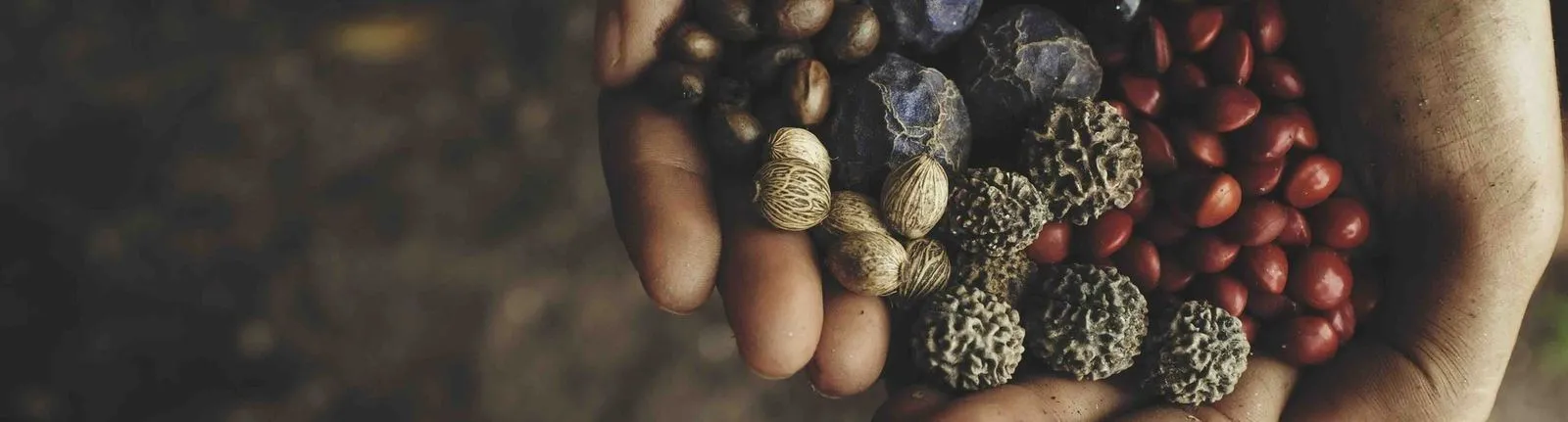
Seed collected by hand. Provenance starts here.
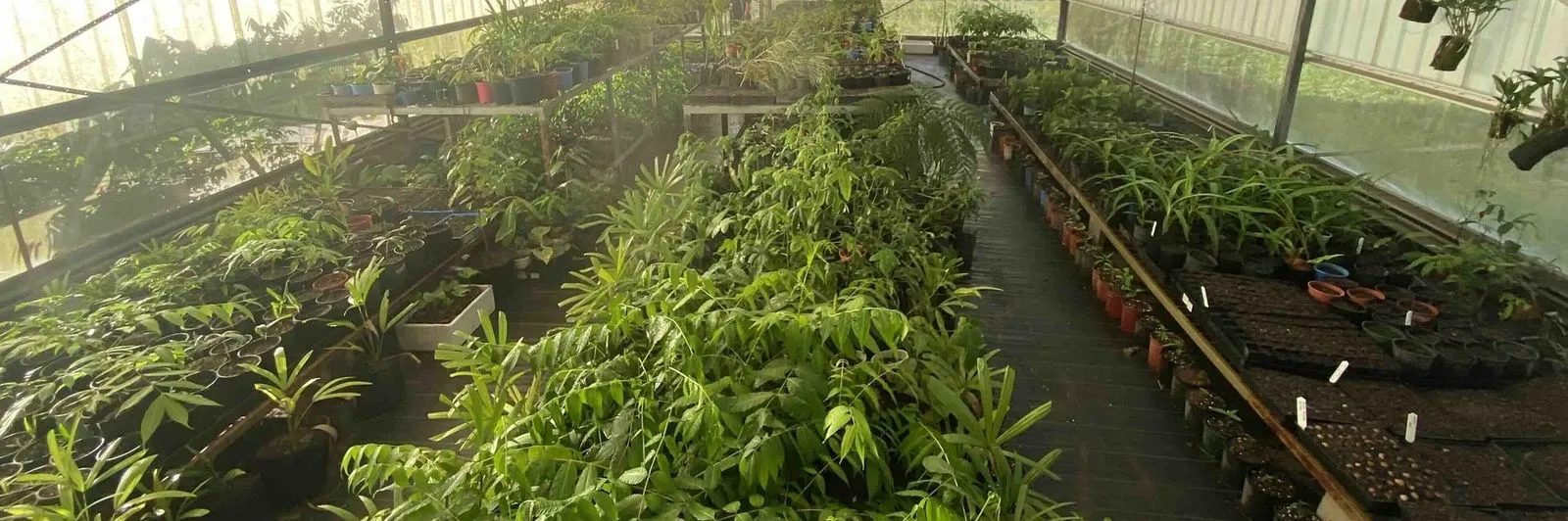
The nursery. Stems for every system from our own seed; the next planting is already growing.
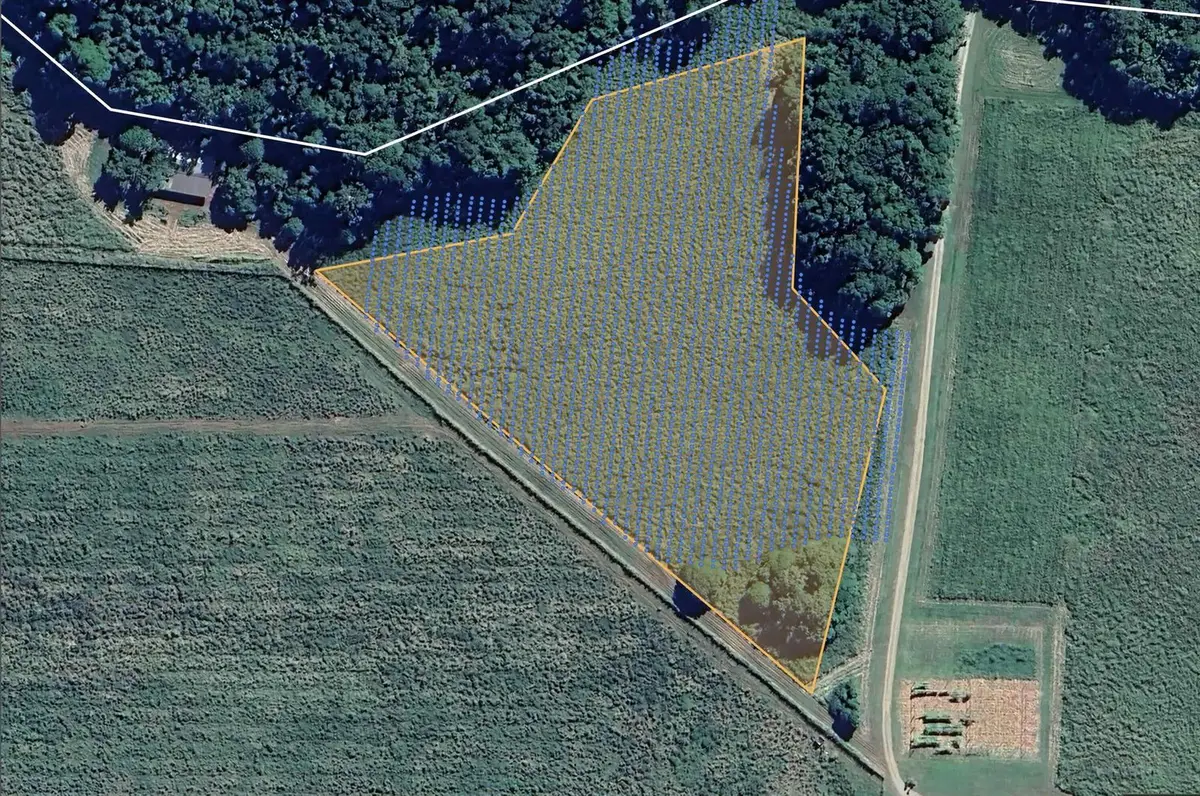
A plant-out block drawn row by row on the aerial.
Planting days are community days. The people who plant it are on the home page
Country
On Eastern Kuku Yalanji Country
The station works in partnership with Jabalbina Yalanji Aboriginal Corporation. Native lines are planned with Traditional Owners on their own terms, at the pace they set.
Work
Rangers and jobs
Rangers, seed collection and planting crews are paid from the work, with value flowing back to Country.
Knowledge
Held behind consent
Traditional knowledge belongs to the Traditional Owners. Any research or traditional-use story sits behind their free, prior and informed consent.